Bee Pollen Benefits: How to Safely Enhance Your Diet
Bee pollen is becoming a popular choice among people looking for natural ways to boost their health. It’s like a treasure chest of nutrients, packed with vitamins, minerals, and proteins that our body needs to stay healthy. Bee pollen is made by bees, and it’s a mix of pollen, bee saliva, and nectar or honey. People around the world use it not just for its nutritional value but also for its potential to help with various health issues. This guide will take a closer look at bee pollen, exploring what it is, its benefits, and how you can safely add it to your diet. Whether you’re new to bee pollen or looking for more information, this article aims to provide clear and straightforward insights.
What is Bee Pollen?

Bee pollen is essentially what bees collect from flowers. This natural substance is a combination of plant pollen, bee saliva, and traces of nectar or honey. Bees gather pollen from flowers, mix it with their saliva to form granules, and transport these back to the hive using special sacs on their legs. It serves as a primary food source for the hive, especially for the young bees. Beyond its role in the hive, bee pollen has caught the attention of humans for its dense nutritional content and potential health benefits. It appears as small granules that vary in color, reflecting the diversity of flowers visited by the bees.
The nutritional makeup of bee pollen is impressively comprehensive, making it a sought-after supplement. It is rich in proteins, vitamins, and minerals, boasting a profile that includes antioxidants and bioflavonoids. The specific nutrients present can differ based on the variety of plants from which the pollen was collected, leading to a wide range in the composition of available bee pollen products. This variability also influences the taste and color of the pollen, making each batch unique. Given its nutritional density, bee pollen is often considered a “superfood” and is used by people looking to enhance their diet or address specific health concerns through natural means.
Nutritional Benefits of Bee Pollen

Bee pollen stands out as a nutrient-dense food supplement, offering:
- Proteins: Essential for the body’s growth, repair, and maintenance, bee pollen provides a significant amount of proteins, serving as a building block for muscles and tissues.
- Vitamins: It is rich in B vitamins, including B1, B2, B6, and B12, vital for energy production, nerve function, and overall brain health. Bee pollen also contains vitamins C and E, supporting immune system function and skin health.
- Minerals: Offers a variety of minerals such as zinc, which boosts the immune system; magnesium, important for muscle and nerve functions; and iron, crucial for the creation of red blood cells and transporting oxygen throughout the body.
- Antioxidants: Packed with antioxidants like flavonoids and carotenoids, bee pollen helps combat oxidative stress and may reduce the risk of chronic diseases such as heart disease and inflammation.
This rich composition makes bee pollen a powerful supplement that can support overall health and wellness when included in a balanced diet.
How to Safely Incorporate Bee Pollen into Your Diet
Adding bee pollen to your diet can be a great way to enhance your nutrient intake. However, it’s important to do so safely to avoid any adverse reactions, especially if you’re trying it for the first time. Here are straightforward steps to include bee pollen in your meals:
- Start Small: Begin with a tiny amount, such as a quarter teaspoon of bee pollen granules, to ensure you don’t have an allergic reaction. If you experience no adverse effects after a few days, you can gradually increase the quantity.
- Check for Allergies: If you have pollen allergies or are sensitive to bee stings, consult with a healthcare provider before adding bee pollen to your diet. It’s crucial to ensure it’s safe for you.
- Mix with Food: Bee pollen can be sprinkled over breakfast foods like yogurt, cereal, or oatmeal. Its granules can also be blended into smoothies or added to salads for a nutritional boost.
- Stay Hydrated: Drink plenty of water when consuming bee pollen. This helps your body to digest and absorb its nutrients more effectively.
- Store Properly: Keep bee pollen in a cool, dry place, away from direct sunlight to maintain its nutritional quality and prevent spoilage.
By following these simple guidelines, you can safely enjoy the benefits of bee pollen as part of a healthy diet.
Understanding Regulatory Oversight and Safety
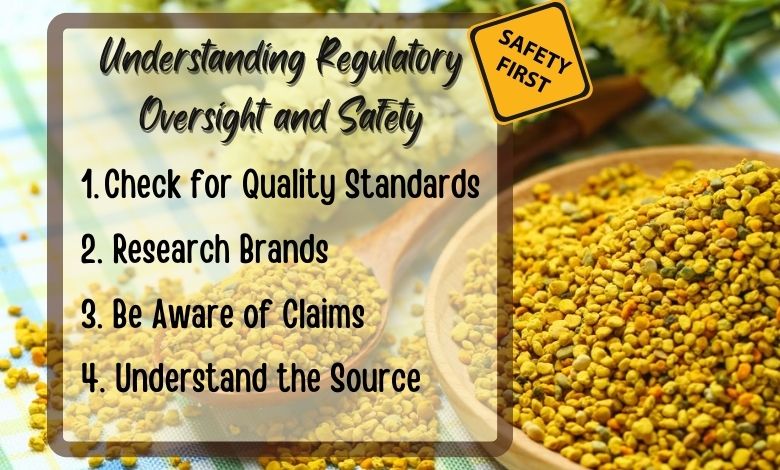
When it comes to supplements like bee pollen, knowing about regulatory oversight and safety is crucial. In many countries, bee pollen is classified as a dietary supplement. This means it doesn’t undergo the strict testing and approval process that medications do. However, this doesn’t mean all bee pollen products are created equal. Here’s what you need to know to choose safely:
- Check for Quality Standards: Look for products that mention compliance with quality standards or certifications. These can indicate the product has been tested for purity and safety.
- Research Brands: Choose bee pollen from reputable brands. Research online reviews or ask for recommendations from healthcare professionals to find products that are trusted.
- Be Aware of Claims: Be skeptical of bee pollen products that claim to cure or prevent diseases. While bee pollen can support health, it’s not a substitute for medical treatment.
- Understand the Source: Knowing where the bee pollen comes from can help you avoid contaminated products. Pollen collected from areas with heavy pesticide use may carry harmful residues.
By keeping these points in mind, you can make informed decisions about incorporating bee pollen into your diet, ensuring you benefit from its nutrients while minimizing risks.
Potential Side Effects and Considerations
Incorporating bee pollen into your diet can offer health benefits, but it’s important to be aware of potential side effects and considerations. Thoughtful use is key to a positive experience:
- Allergic Reactions: The primary concern is the risk of allergic reactions. Individuals may experience symptoms ranging from mild (such as sneezing and an itchy throat) to severe (like shortness of breath or anaphylactic shock), particularly if they have allergies to pollen or bee stings.
- Pregnancy and Breastfeeding: Limited research on bee pollen’s effects during pregnancy or breastfeeding means it’s best avoided during these times. Its potential to stimulate the uterus or impact the baby remains unclear.
- Interactions with Medications: Bee pollen may interfere with the effectiveness of certain medications, including blood thinners. Consulting a healthcare provider before combining bee pollen with any prescription medications is strongly recommended.
- Quality and Purity: The lack of strict regulation for bee pollen supplements means quality and purity levels can vary. To reduce the risk of consuming a contaminated product, choose bee pollen from well-regarded sources.
Being informed about these potential side effects and considerations is crucial for safely adding bee pollen to your diet. Start with small doses to see how your body responds and seek advice from a healthcare professional to ensure it suits your health situation.
Conclusion
Bee pollen, packed with vitamins, minerals, and antioxidants, offers significant health benefits. Yet, caution is key due to potential allergic reactions and interactions with certain medications. Pregnant or breastfeeding women are advised against its use, while others should begin with minimal quantities to test tolerance. Always choose reputable sources for quality bee pollen and consult a healthcare provider to confirm its suitability for your health profile. Following these steps ensures bee pollen can safely contribute to a well-balanced diet.


